Woodworm Inspections
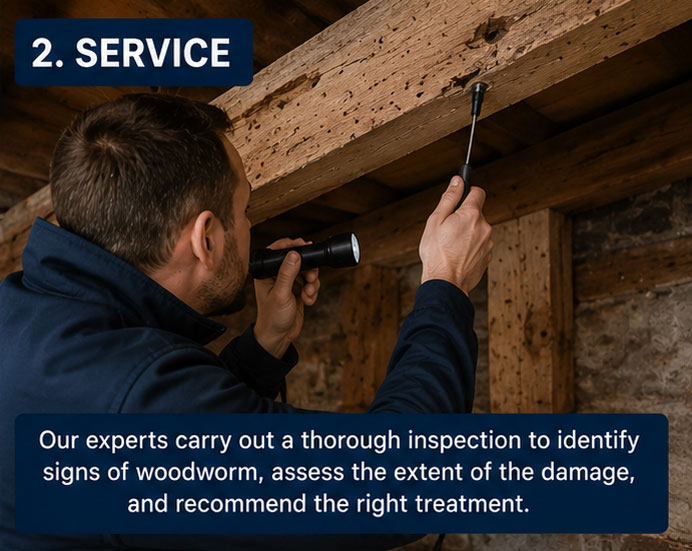
Assess flight holes, frass, affected timber and the likelihood of current insect activity.
Arrange an inspection →✓ Experienced Specialists ◈ Evidence-Led Advice ★ Timber Protection ◆ Covering All Essex Areas

WOODWORM INSPECTION & TREATMENT · ESSEX
Concerned about flight holes, fine wood dust or weakened timber? We assess the signs, explain what they mean and recommend treatment only where it is needed.
OUR WOODWORM SERVICES
Woodworm signs can be confusing. We look at the timber, the evidence of activity and the conditions around it before explaining the options available.
Assess flight holes, frass, affected timber and the likelihood of current insect activity.
Arrange an inspection →Targeted treatment advice where an active infestation has been identified and action is appropriate.
Discuss treatment →Understand the extent of damage and whether further timber assessment or repair may be needed.
Talk to our team →Practical guidance on moisture, ventilation and looking after vulnerable timber.
Get advice →KNOW WHAT YOU ARE DEALING WITH
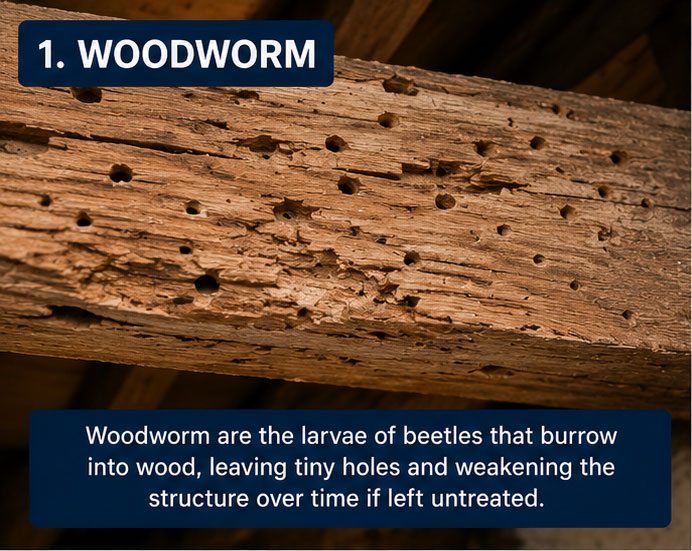
Old flight holes can remain in timber for many years after beetles have emerged. Fine dust, fresh activity and the condition of the wood all need to be considered together.
An evidence-led inspection helps distinguish historic damage from a current problem, so you can make an informed decision rather than paying for unnecessary work.
Talk through your concernsThese signs can help guide an assessment, but should not be used alone to confirm active woodworm.
HOW WE WORK
Describe the holes, dust or timber damage and where it has appeared.
We consider the visible evidence, timber condition and accessible areas.
Understand whether the signs suggest active infestation or historic damage.
Where treatment or further work is justified, the options are explained clearly.
PROFESSIONAL WOODWORM CONTROL
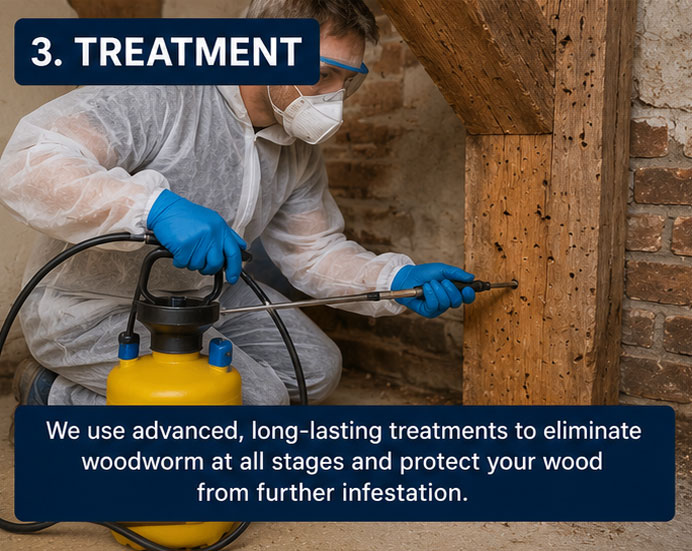
Where active wood-boring insect activity is confirmed, the appropriate treatment depends on the insect, the timber affected, the extent of activity and access to the area.
We explain the recommended approach and any preparation or access requirements. If the timber has been weakened, further assessment or repair may also be needed.
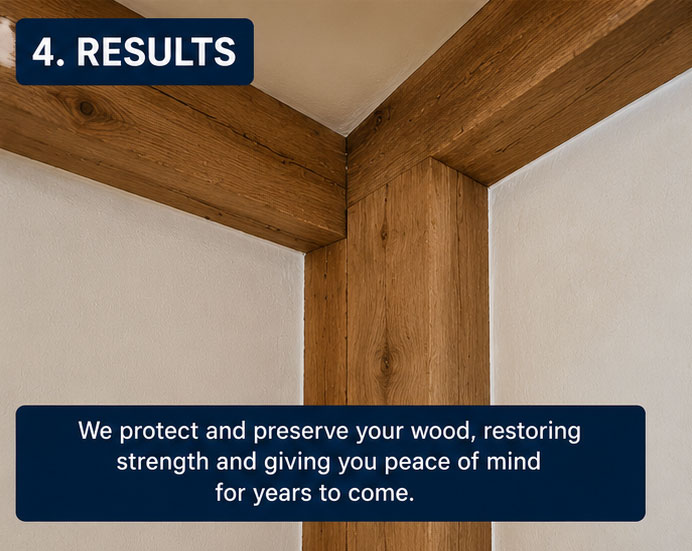
Our aim is to help you understand the problem and choose a proportionate response.
Speak to us about the signs you have noticed and arrange an assessment for your property.
TIMBER & PROJECT GALLERY
Explore examples of timber and woodworm-related work. Every property is different, so an assessment is the best way to understand the condition of your own timber.
LOCAL WOODWORM SPECIALISTS
We welcome enquiries from homeowners, landlords and businesses throughout Essex. Visit our local pages for more information about the areas we cover.
COMMON QUESTIONS
No. Flight holes can remain long after beetles have left the timber. Other signs, such as fresh wood dust or emerging beetles, may help indicate activity, but an inspection is needed to assess the evidence.
It may be frass, a powder-like material associated with wood-boring insect activity. Its presence and location can be useful when assessing a suspected infestation.
Yes. Some wood-boring insects can affect structural timber. The extent of damage depends on the species, duration of activity and condition of the wood.
No. Treatment should be based on evidence of active infestation and the condition of the timber. Historic holes alone do not necessarily justify treatment.
Persistent moisture can contribute to timber deterioration. If damp is present around affected wood, the source should be investigated as part of the wider assessment.
Yes. We welcome enquiries from across Essex. See our Areas We Cover page or contact us with your town to check availability.
Call 07379 221549 or use our contact page to discuss the signs you have found and the next steps.
GET CLEAR ADVICE
Tell us what you have noticed and arrange an inspection across Essex.

Professional woodworm inspections and timber treatment advice for homes and buildings throughout Essex. Clear findings, practical recommendations and treatment only where it is needed.
For inspection and treatment enquiries across Essex, contact our team.
© 2026 Woodworm Essex. All rights reserved.
Contact Us | Web Design & SEO by Low Cost Web Designs